
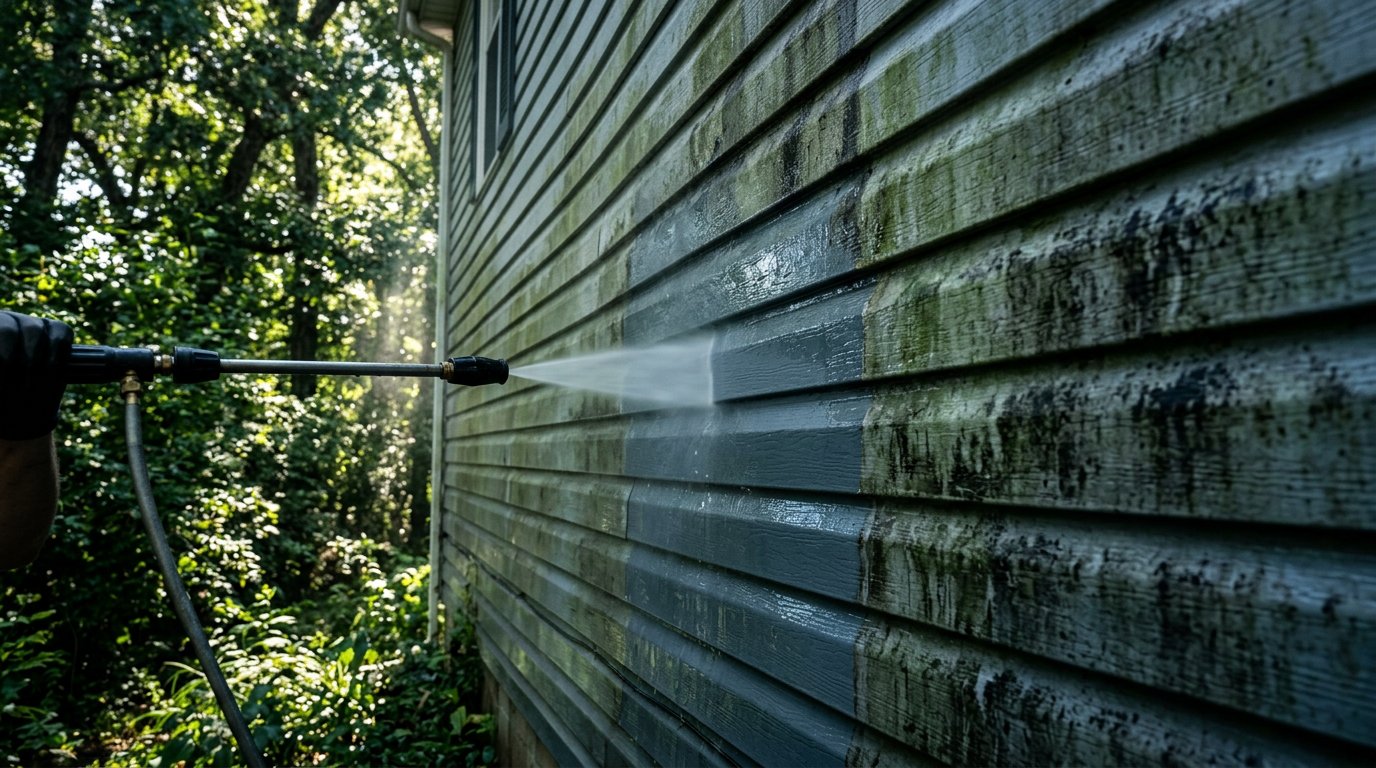
Mold buildup on siding doesn’t happen all at once—it builds season by season as moisture, shade, and temperature swings create the perfect environment for growth. On Long Island, the same weather patterns that affect paint and decks also drive mildew and dirt buildup on siding. Below, we break down what to watch for each season and how to clean safely before damage sets in.
What Seasonal Conditions Cause Mold Buildup On Siding the Fastest?
Mold buildup on siding accelerates when moisture stays on the surface for long periods, especially in shaded areas with limited airflow. On Long Island, humid summers, leaf-heavy falls, freeze-thaw winters, and damp springs can each trap water and grime against siding, letting spores spread and feeding mildew stains and algae.
If you’re already seeing green or black streaks, it may be time to schedule professional exterior cleaning and painting services so the surface is properly cleaned and protected before the next weather shift makes it worse.
Understanding Mold, Mildew, and Dirt on Siding: What’s the Difference?
Mildew is a surface-level fungal growth that often looks like gray, white, or black powdery patches, while mold is typically darker, can look spotty or streaky, and may spread more aggressively in damp conditions. Dirt buildup on siding is usually a mix of dust, pollen, soot, and organic debris that sticks to wet surfaces and feeds staining over time.
These problems often overlap. Dirt holds moisture, moisture supports mildew, and mildew can make siding look permanently discolored unless it’s cleaned correctly.
Season-by-Season: Why Long Island Weather Triggers Siding Stains
Spring: Pollen, Rain, and New Growth
Spring is a perfect storm for dirt buildup on siding. Pollen coats the exterior, rain turns it into a sticky film, and shaded areas stay damp longer as temperatures fluctuate.
In Nassau and Suffolk Counties, spring also brings wind-driven debris that collects behind shrubs and along lower courses of siding. That debris traps moisture and becomes a breeding ground for seasonal mold issues serving Nassau County, NY.
If you’re planning exterior work this time of year, pairing cleaning with protective finishes matters. For timing and planning, why spring is the best time for exterior paint touch ups explains how spring conditions affect exterior surfaces.
Summer: Humidity and Shade Create Peak Growth Conditions
Long Island summers often bring high humidity, heavy storms, and long periods of warmth—ideal conditions for mold and mildew. North-facing walls and areas under trees tend to stay damp, making mildew removal near Long Island, NY a common mid-summer need.
Summer is also when many homeowners notice dark streaks that seem to “appear overnight.” In reality, spores were already present; warm, wet weather simply speeds up how fast they spread.
Many homes benefit from a mid-year cleaning, and why June is the perfect time to power wash your home covers why early summer is a smart window before peak humidity hits.
Fall: Leaves, Organic Debris, and Longer Dry Times
Fall brings cooler nights, early morning dew, and leaf litter that piles up near foundations and behind landscaping. Organic debris is more than “mess”—it holds water against siding and can stain it as it breaks down.
This is also a common season for homeowners to notice dirt buildup on siding along gutters and downspouts. When gutters overflow, repeated wetting leaves streaks and can create algae or mildew lines.
Winter: Freeze-Thaw Cycles and Hidden Moisture
Winter doesn’t always stop growth—it just slows it down. Moisture still gets trapped in shaded areas, and freeze-thaw cycles can push water into small gaps around trim, caulk lines, and siding edges.
If you’re seeing peeling paint, cracking caulk, or soft wood trim along with staining, it’s worth reviewing how to know when it’s time to repaint your homes exterior to spot warning signs early.
How Do You Know If You Need Mildew Removal Near Long Island, NY?
If you see black, green, or gray patches that come back quickly after rain, you likely need mildew removal near Long Island, NY rather than a basic rinse. Recurring staining on shaded walls, musty odors near exterior entry points, or streaks under gutters are also strong indicators that growth is active and spreading.
Some homeowners try stronger cleaners, but improper mixes or high pressure can damage siding or force water behind it. When in doubt, it helps to start with a safer plan and then escalate only if needed.
Where Mold and Dirt Buildup Hit Hardest on Most Homes
On many Long Island properties, mold buildup on siding concentrates in predictable zones. These areas stay damp longer, collect debris, or get less sun and airflow.
- North-facing or heavily shaded walls
- Behind shrubs and tight landscaping lines
- Under rooflines, soffits, and leaky gutters
- Near sprinkler spray patterns and hose bibs
- Along garage sides and narrow side yards
If you’re dealing with recurring staining in these areas, it can help to address surrounding issues (like gutter flow and landscaping clearance) along with siding cleaning near Suffolk County, NY.
Cleaning Tips: What Helps vs. What Can Make Siding Worse?
Siding cleaning works best when it removes growth without damaging the material underneath. Vinyl, fiber cement, stucco, and painted wood all respond differently, so a “one method fits all” approach often causes trouble.
What usually helps
- Gentle cleaning methods and the right cleaner for the siding type
- Cleaning from bottom to top to avoid streaking, then rinsing top to bottom
- Addressing shade and airflow by trimming back plants
- Fixing gutter overflow and downspout discharge patterns
What often causes damage
- Using too much pressure and driving water behind siding
- Overusing harsh chemicals that can spot finishes or harm landscaping
- Cleaning without addressing the moisture source (so stains return fast)
When Should You Clean Siding to Prevent Seasonal Mold Issues Serving Nassau County, NY?
For many homeowners, the best schedule is a spring or early-summer clean to remove pollen, grime, and early growth before humidity peaks. A second check in fall can help remove leaf stains and prevent debris from overwintering on the surface.
When you’re planning a repaint, timing matters even more. A clean surface and proper prep work help coatings last longer, which is why homeowners often combine exterior maintenance with broader projects through our full range of home improvement services.
How Cleaning Connects to Paint and Repair (And Why Prep Matters)
Even if your main concern is siding stains, recurring mold and dirt can signal surface issues that will affect paint adhesion. If the coating is already compromised, stains tend to return faster because moisture gets into the surface more easily.
That’s also why surface prep is a big deal across the home, not just outside. If you’re updating interiors as part of a larger refresh, sheetrock and drywall repair can be a key step before painting so walls and ceilings finish smooth and clean.
Get Help With Siding Cleaning Near Suffolk County, NY and Long Island Exteriors
If you’re tired of repeat staining, we can help you figure out what’s driving mold buildup on siding and the safest way to remove it without damaging your exterior. For an estimate and a clear plan, call Purely Paint at (516) 835-5880 or request pricing through our estimate page. If you’d rather speak with our team first, you can also reach us via the contact us page.
Common Questions About Seasonal Mold, Mildew, and Dirt Buildup on Siding
Can mold buildup on siding damage my home, or is it just cosmetic?
Often it starts cosmetic, but long-term growth can contribute to staining, trapped moisture, and premature wear—especially on painted wood, trim, or areas with failing caulk. If moisture keeps getting held against surfaces, it can lead to peeling paint and more frequent maintenance. Cleaning and correcting moisture sources usually prevents bigger issues.
What time of year is best for mildew removal near Long Island, NY?
Late spring through early summer is usually ideal because temperatures support effective cleaning and surfaces dry faster. That timing also helps remove pollen and early growth before peak humidity. If you notice fast-spreading stains in midsummer, it’s still worth addressing right away to prevent deeper discoloration.
Is power washing always safe for dirt buildup on siding?
Not always. High pressure can crack vinyl, etch softer materials, strip paint, and push water behind siding. Many situations call for low-pressure washing with the correct cleaner and rinse method instead. The safest approach depends on your siding type, its age, and whether you already have loose paint or open gaps.
Why do seasonal mold issues serving Nassau County, NY seem worse on one side of the house?
It usually comes down to shade, airflow, and how water moves around your home. North-facing walls dry slower, and landscaping can block sun and ventilation. Overflowing gutters, sprinklers hitting siding, and tight side yards also increase dampness. Targeting those conditions helps stop mold and mildew from coming back.
Will exterior painting prevent siding stains from returning?
Quality exterior paint can help, but only when the surface is properly cleaned and prepared first. Painting over mildew or trapped dirt leads to early failure and recurring stains. If your exterior coating is aging, addressing cleaning, prep, and repairs together is the best way to improve durability and keep siding looking clean longer.



Leave A Comment